
FUT (Strip) Hair Transplant in McLean, VA
Medically reviewed by Dr. William H. Lindsey, MD, FACS — Board-Certified Facial Plastic Surgeon — IAHRS Member — Last reviewed: July 2026
Dr. Lindsey performs every FUT procedure personally at Lindsey Medical Hair Transplant Center in McLean, VA. Learn more about Dr. Lindsey’s credentials and background.
FUT, also called the strip method, is a hair transplant technique that removes a narrow strip of scalp from the donor area, from which individual follicular units are dissected and transplanted to the recipient area. Dr. William H. Lindsey, MD, FACS performs FUT at his McLean, VA clinic using a two-layer trichophytic closure that minimizes scar visibility and allows hair to grow through the closure line. This closure technique is a meaningful differentiator from standard single-layer strip closures used at many other practices. Patients from Washington DC, Northern Virginia, and Maryland choose FUT at Lindsey Medical for its high graft-count capacity and the precision of Dr. Lindsey’s closure technique.
What Is FUT Hair Transplant Surgery?
The first and most popular is called STRIP technique Follicular Unit Transplantation. In this procedure the back of the head, known as the “donor area” is numbed with local anesthetic and a thin strip of skin containing hair roots is painlessly removed by Dr. Lindsey and sutured closed. The hair roots within the sliver are then dissected under high power microscopes into “follicular units,” also known plainly as “grafts”.
While the dissection process is being performed, Dr. Lindsey will numb the bald areas and make very tiny incisions using custom made instruments. These incisions rarely exceed 1 millimeter in length and are similar in size to a comma in newsprint. Dr. Lindsey creates the smallest slits possible and packs them as close together as nature will permit to allow for the highest density and most natural (and pleasing) result.
After the tiny incisions are made, the grafts are then placed into the slits according to Dr. Lindsey’s plan. At the end of the day most patients look like they just had a “buzz cut” in the areas that were bald. The area also looks as if it had a rash, which disappears after 3 days.
After 7 days, the sutures are removed by Dr. Lindsey and the patient does not need to visit the office anymore. The implanted hair will grow for about 4 weeks and then fall out as the hair roots go into a “sleeping” phase to allow themselves to heal into the once bald areas of scalp. Then, in about 4 months, the hairs will begin to sprout out and grow. These hairs will continue growing and thickening until they get to their final maturity level by 14 months.
Generally, most patients see a cosmetically significant benefit by the end of their 6th month. By the end of one year the patient is encouraged to visit the clinic for follow up photos.

The Two-Layer Trichophytic Closure Technique
A standard FUT closure uses a single layer of sutures to close the donor site after the strip is removed. Dr. Lindsey uses a two-layer trichophytic closure, which involves two sequential suture layers. The second layer is placed so that the hair follicles at the edge of the closure grow through the scar line, making the healed scar significantly less visible than a standard single-layer closure. The technique also reduces tension on the outer layer, which further improves the final appearance.
For patients who wear their hair short or who want the option to shave their head after surgery, this closure approach materially changes what the donor area looks like at close range. Patients who have had prior strip procedures at other practices and are concerned about the scar can consult with Dr. Lindsey to discuss whether the scar can be revised using this technique.
Patient Results
Before & After Gallery
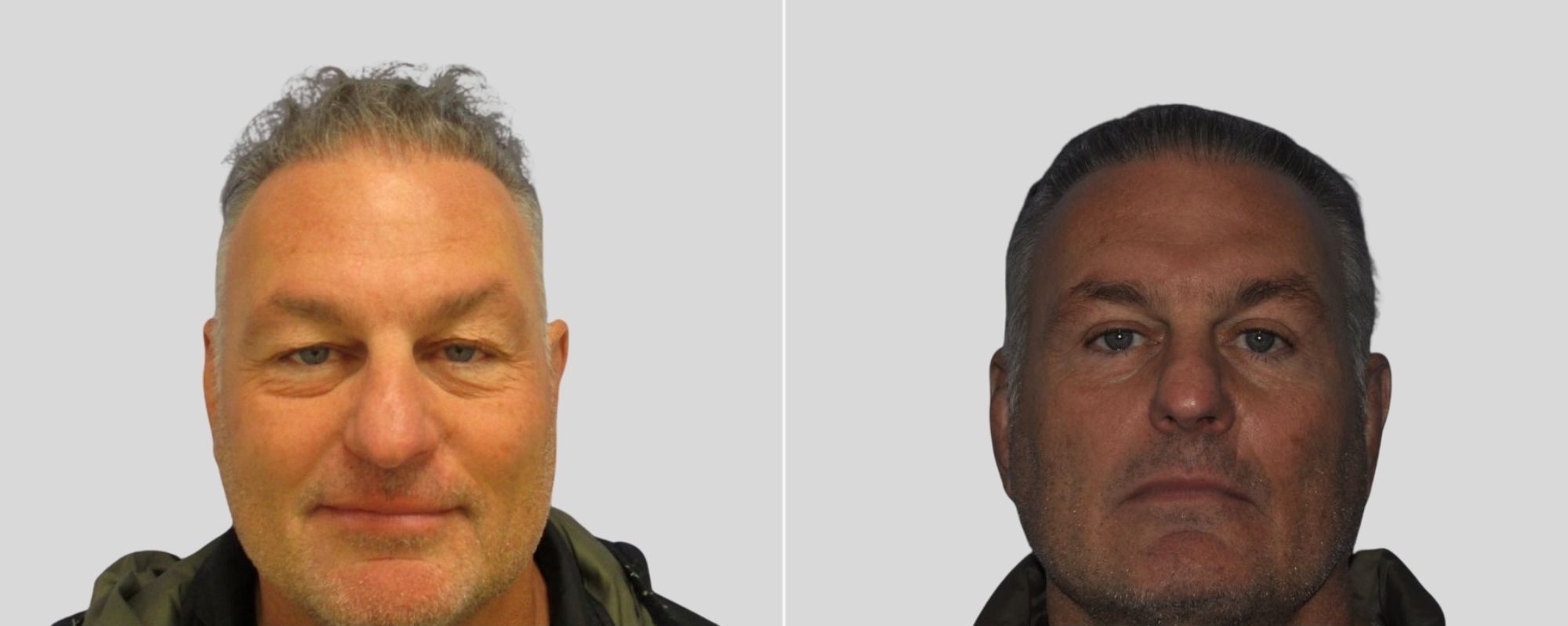
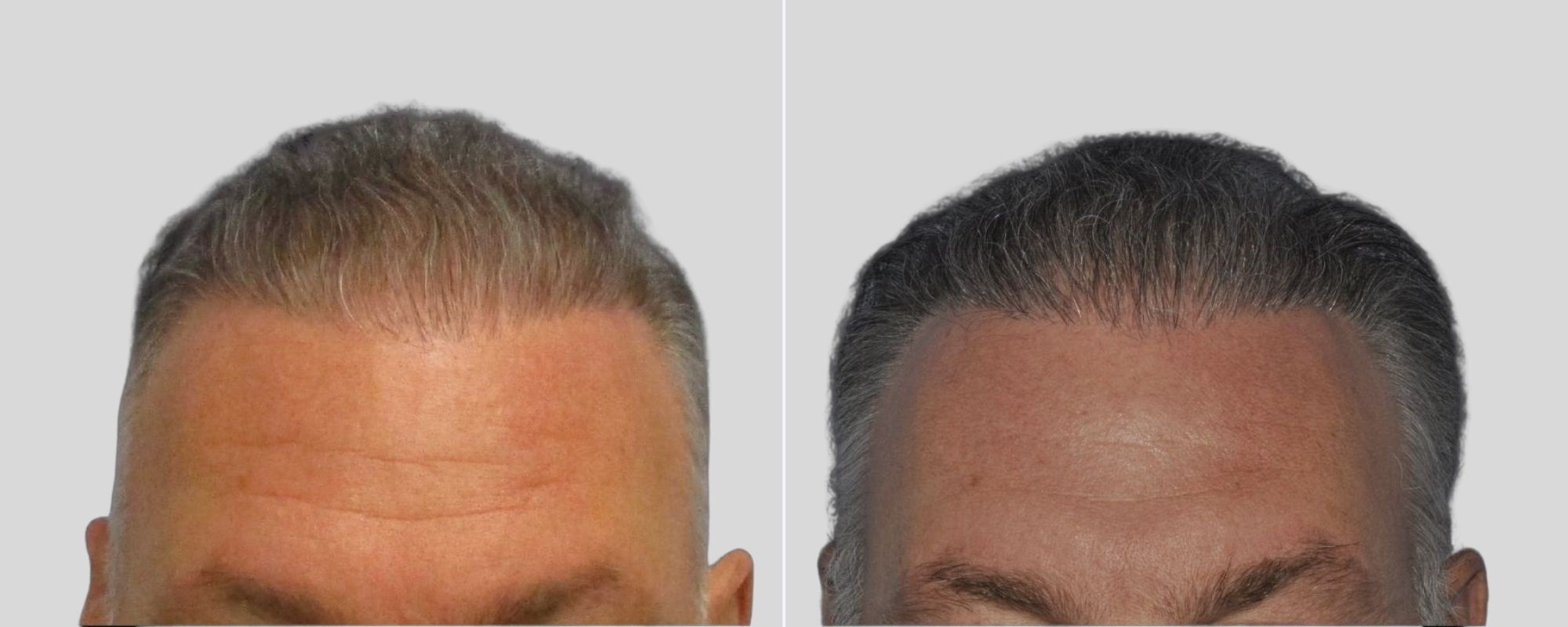
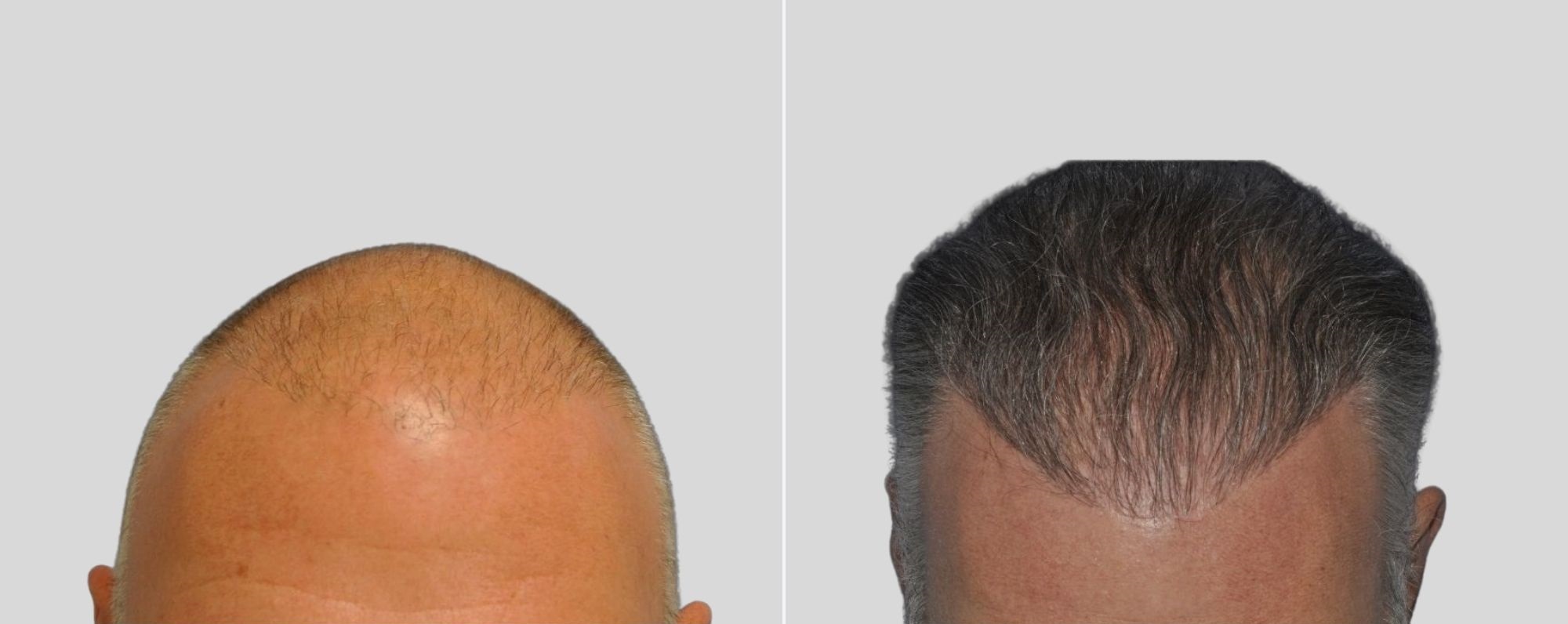
Repair Case
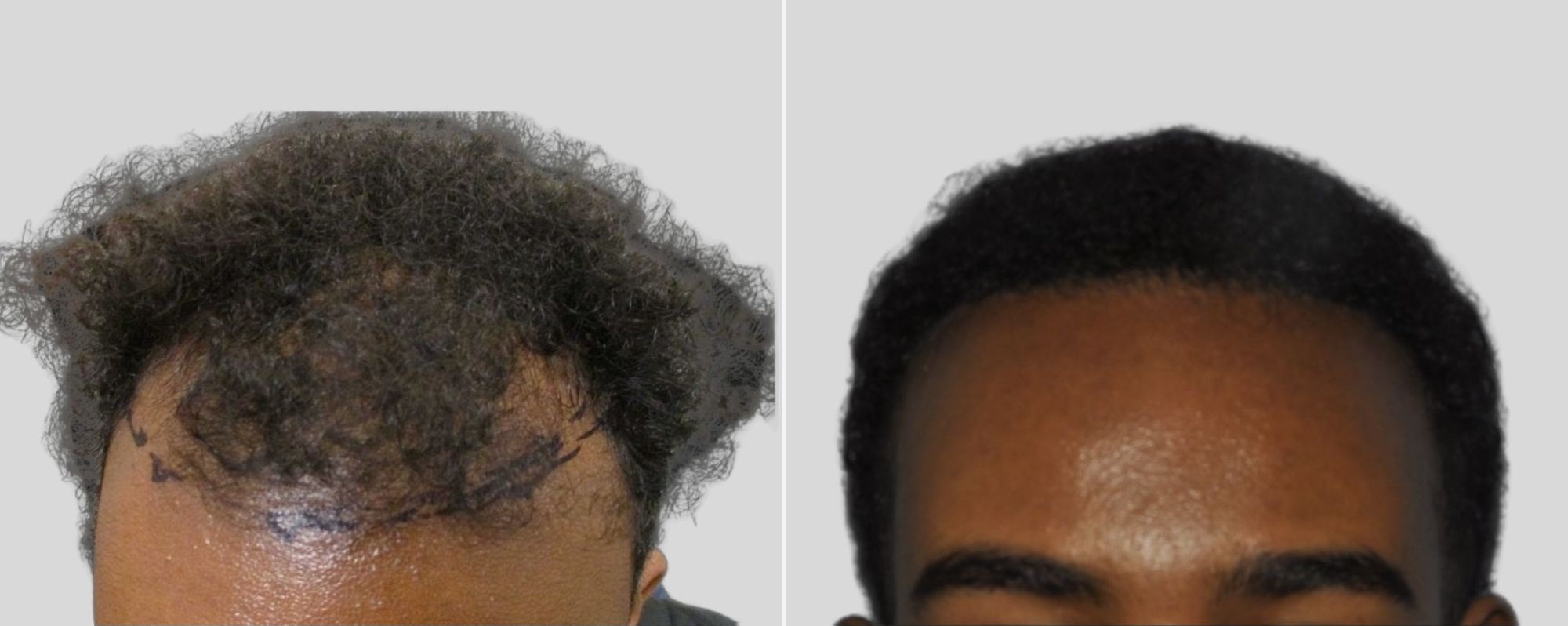
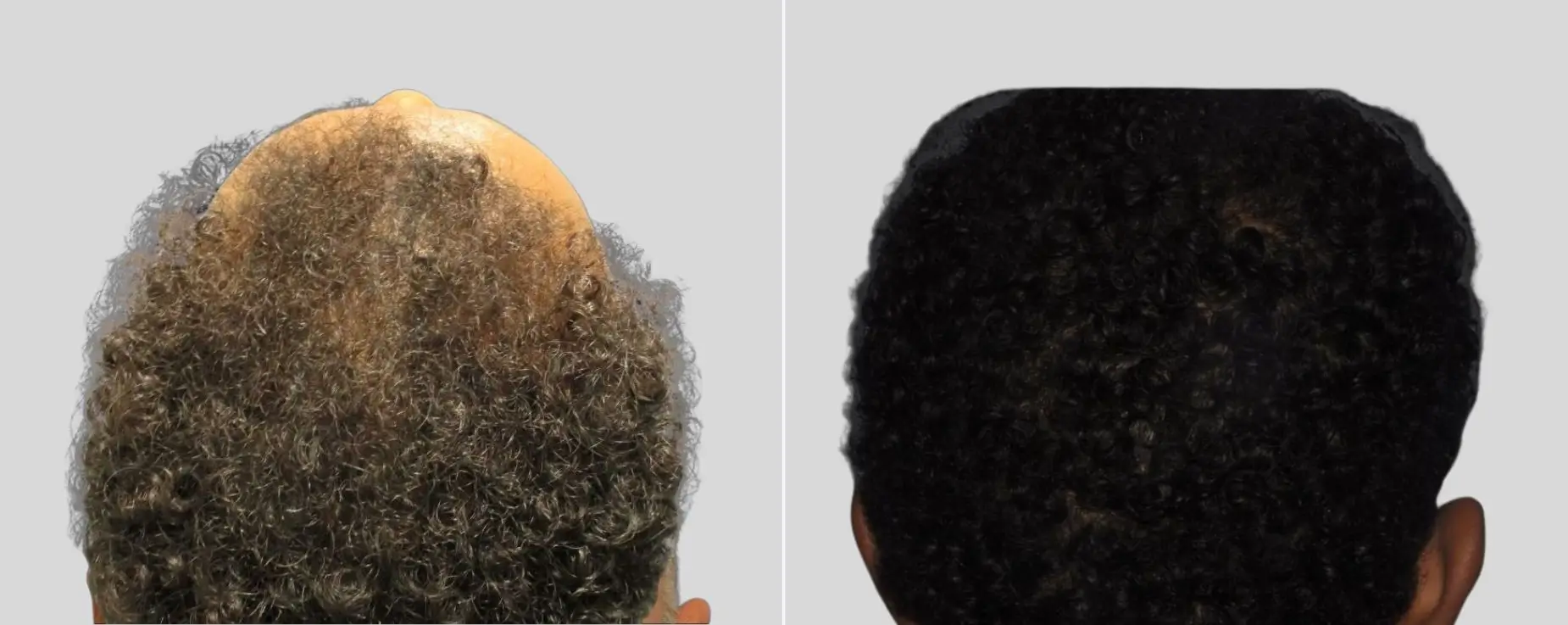
Young Male Case
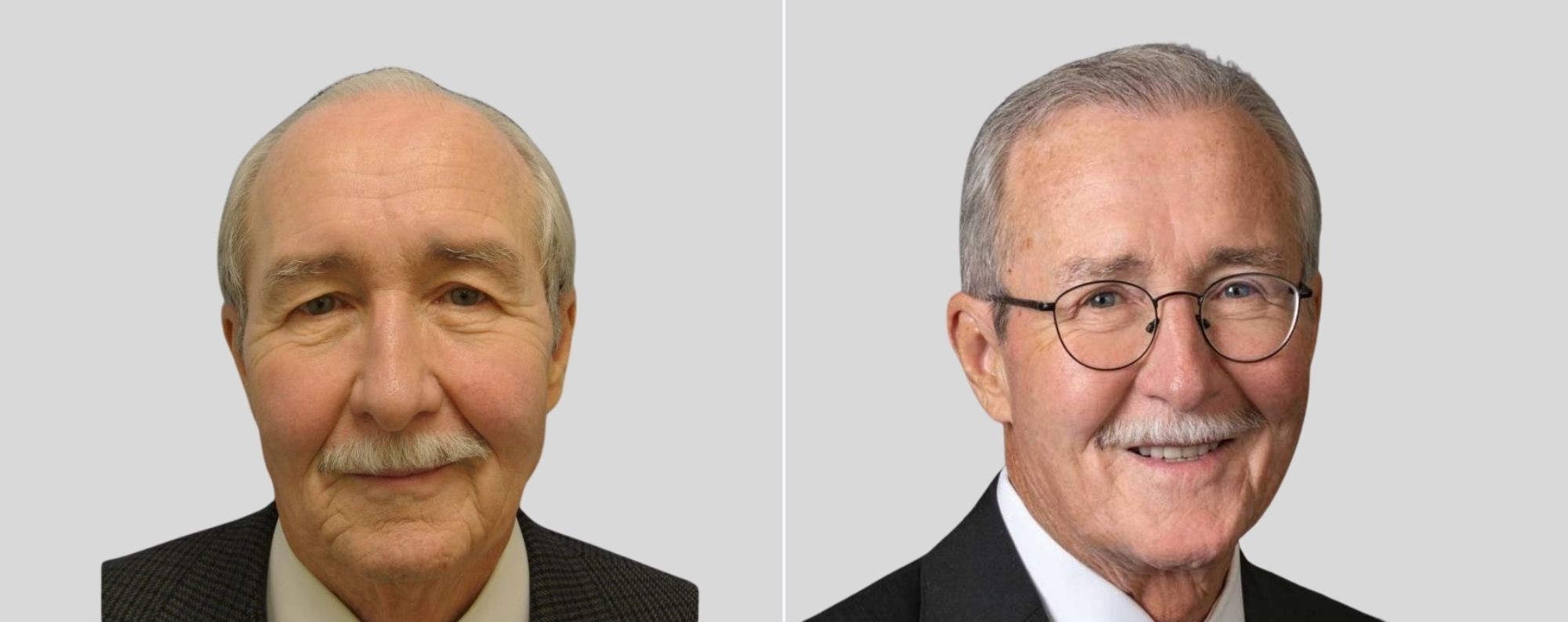
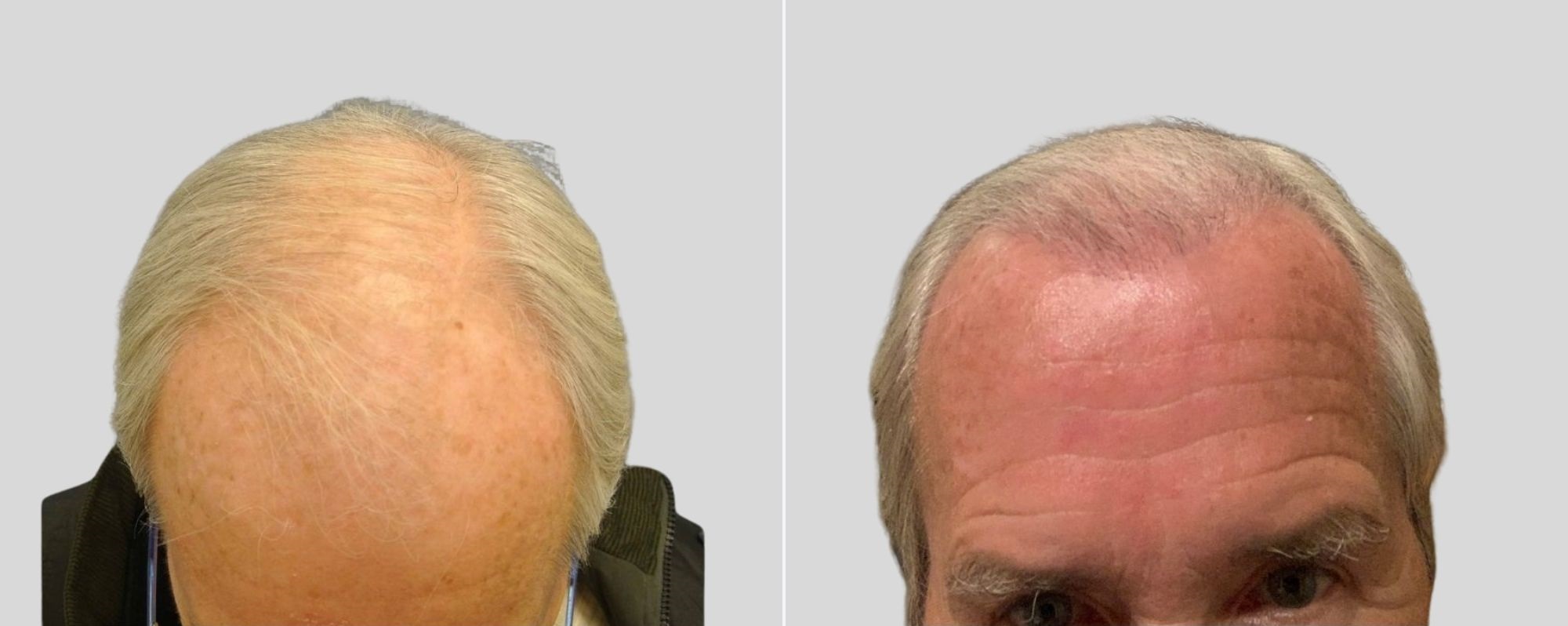
Older Male Case
Am I a Candidate for FUT Hair Transplant?
FUT is well-suited for patients who want to maximize the number of grafts in a single session, particularly those with moderate to significant hair loss across the crown and hairline. Because FUT harvests grafts from a single strip rather than individual extractions, it allows for a larger session size than FUE in many cases — see FUT pricing by graft session size. Patients who do not regularly wear their hair very short at the back are typically the strongest candidates, as a fine linear scar is present at the donor site after surgery.
FUT is also the preferred technique for patients who want to preserve their FUE donor supply for a second procedure in the future, or for patients whose scalp laxity makes strip harvesting more efficient than follicular unit extraction. Dr. Lindsey evaluates every case individually during a free consultation and recommends the technique or combination that best serves the patient’s long-term goals.
FUT Recovery: What to Expect After Strip Surgery
FUT patients typically return to desk work within 7 to 10 days. The donor site is closed with sutures that are removed at a follow-up visit approximately 10 to 14 days after surgery. Some patients experience temporary tightness or numbness in the donor area as the tissue heals. Transplanted hairs enter a shedding phase between weeks 2 and 8, which is normal and expected. New growth typically becomes visible around month 3 to 4, with density continuing to improve through month 12 to 18.
Dr. Lindsey’s team provides complete pre and post-operative care instructions before your procedure date and is available for follow-up questions throughout your recovery. See full pre and post-operative care instructions.
FUT vs. FUE: Which Hair Transplant Is Right for You?
FUT and FUE are both proven hair restoration techniques performed by Dr. Lindsey at his McLean, VA clinic. The primary differences are in how donor hair is harvested, the resulting donor-area appearance, and the maximum graft count achievable in a single session.
FUT typically allows for a higher graft count per session and is often more cost-efficient for patients who need a larger restoration. FUE leaves no linear scar and is better suited for patients who wear their hair very short or who have limited scalp laxity. Dr. Lindsey performs both techniques and will recommend the right approach, or a combination, based on your individual case. Read our detailed FUT vs. FUE comparison guide.
Related Hair Restoration Services at Lindsey Medical
FUE Hair Transplant — Minimal scarring, natural results with Ultra Refined FUE technique.
FUT vs. FUE Comparison — Unsure which procedure fits your case? See our detailed comparison guide.
Hair Transplant Repair — Corrective FUT and FUE procedures for patients with poor results from prior surgeries.
FUT and FUE Pricing — Transparent, all-inclusive pricing by graft session size.
Hair Transplant Techniques — Learn about Dr. Lindsey’s surgical approach, dense packing, and megasession methods.
FUT Hair Transplant: Frequently Asked Questions
The two-layer trichophytic closure is a suturing technique Dr. Lindsey uses at the donor site after FUT surgery. Unlike a standard single-layer closure, it places a second suture layer that allows hair follicles at the edge of the incision to grow through the scar line as healing progresses. The result is a donor-site scar that is significantly less visible than a conventional strip closure, particularly at shorter hair lengths. This technique is part of Dr. Lindsey’s standard FUT procedure at his McLean, VA clinic.
FUT sessions at Lindsey Medical range from under 800 grafts to over 4,000 grafts in a single procedure. The graft count is determined by your scalp laxity, the width of the donor strip, and the density of your donor area. Larger mega sessions are possible with FUT because a high number of grafts can be harvested efficiently from a single strip. The exact graft estimate for your case is determined by Dr. Lindsey during a free consultation. See our full FUT pricing by session size.
FUT at Lindsey Medical is priced on a tiered session basis. Sessions range from $7,500 for procedures under 800 grafts to $18,000 for sessions up to 4,000 grafts. The pricing reflects the all-inclusive cost of the procedure, performed personally by Dr. Lindsey. A personalized cost estimate is provided at your free consultation. See our full FUT pricing guide for a complete breakdown.
FUT produces a linear scar at the donor site on the back of the scalp. With Dr. Lindsey’s two-layer trichophytic closure technique, the scar is typically fine and becomes covered by surrounding hair as it grows back. Patients who wear their hair at a number 3 guard length or longer generally find the scar is not visible in normal circumstances. Patients who shave their head very short may see a fine line. The visibility of any scar depends on individual healing, hair characteristics, and how short the hair is worn. Dr. Lindsey discusses realistic expectations with every patient during the consultation.
There is no universal answer. FUT is generally the better choice for patients who need a high graft count in a single session, who do not regularly shave the donor area very short, or who want to preserve FUE donor supply for future procedures. FUE is generally better for patients who wear their hair very short at the back, who have limited scalp laxity, or who prefer no linear scar in the donor area. Many patients benefit from a combination of both techniques across two procedures. Dr. Lindsey evaluates each case individually and recommends the approach that best serves your long-term hair restoration goals. See our full FUT vs. FUE comparison guide.
Consultations with Dr. Lindsey are free. During your appointment, Dr. Lindsey personally evaluates your scalp, donor area, and degree of hair loss, and provides a graft estimate and procedure recommendation. You can schedule by calling (703) 356-3260 or by submitting the contact form on this page. His team is available Monday through Friday, 9am to 4pm.